Eye research / Dry eye / 2012
Dry Eye Research in 2012: 33 Notable Human Studies
Research explored dry eye subtypes, meibomian gland dysfunction, daily impact, and a wider range of controlled treatments and diagnostic tools.
The 2012 picture
Three themes stand out:
- In one clinic cohort, meibomian gland findings were common among patients whose dry eye could be assigned to an aqueous or evaporative subtype.
- Randomized trials tested thermal pulsation, new anti-inflammatory drugs, tear substitutes, and treatments for gland dysfunction, with results that differed by outcome.
- Population and clinical studies reinforced that symptoms, gland changes, tear tests, and quality of life do not line up perfectly.
What the research shows
The 2012 literature moved from general dry-eye labels toward more defined gland and tear patterns, while randomized trials tested several ways to treat them. Some therapies improved specified outcomes, whereas others produced only secondary signals or short-lived evidence. The diagnostic studies also exposed an enduring challenge: symptoms, gland structure, tear chemistry, and office tests often describe overlapping but different parts of the condition.
Controlled treatment studies
The 2012 intervention studies were unusually varied. Read each result against its prespecified main outcome, comparison group, follow-up time, and patient selection.
-
Hypotonic hyaluronate drops in a phase 3 trial
A multicenter trial randomized 304 people with moderate dry eye to hypotonic sodium hyaluronate, saline, or carbomer drops for 84 days. At day 28, symptom frequency and corneal staining improved more with hyaluronate than saline. The measured advantage was modest, and this study of one formulation cannot establish that all hyaluronate products work alike.
-
Adding diquafosol when hyaluronate was insufficient
In 32 patients whose dry eye responded inadequately to hyaluronate alone, investigators randomly gave one eye additional diquafosol while the fellow eye continued hyaluronate. After four weeks, tear breakup, staining, and several symptoms improved in the combination eyes. The paired-eye design controls for patient differences, but the small sample and short follow-up limit conclusions about sustained benefit.
-
Azithromycin drops for contact lens-related dryness
An open-label pilot trial randomized 50 contact lens wearers with dryness to azithromycin drops or rewetting drops for four weeks. Comfortable lens-wear time rose more with azithromycin, by over two hours from baseline, while total wear time and tear osmolarity did not clearly differ. The unmasked, small study needs replication before routine use can be inferred.
-
Thermal pulsation compared with warm compresses
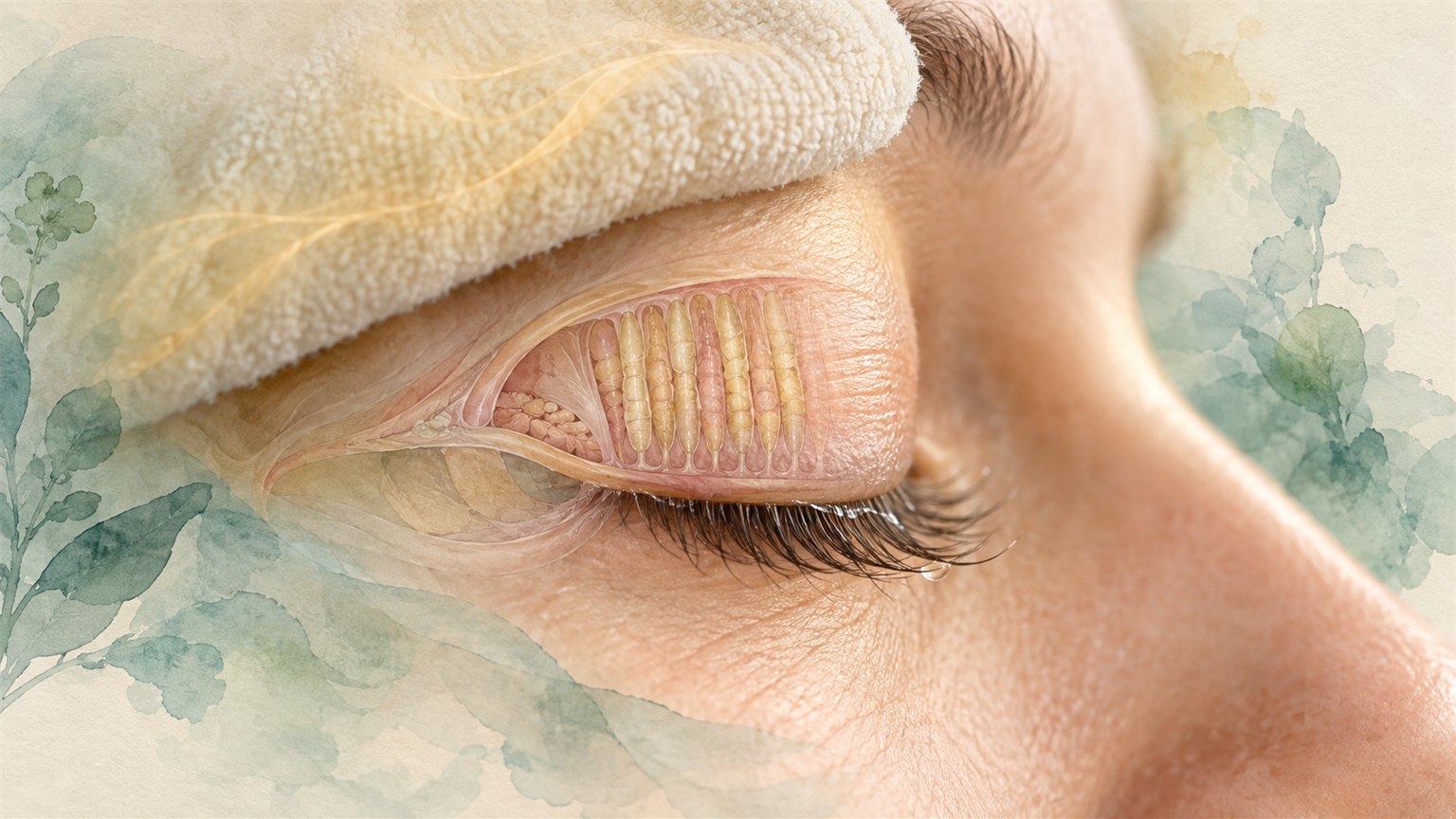
An open-label randomized trial assigned 139 adults with meibomian gland dysfunction to one 12-minute LipiFlow treatment or an iHeat warm-compress regimen. At two weeks, gland secretion, tear breakup time, and symptoms favored thermal pulsation; controls then crossed over, limiting later direct comparison. The trial supports a short-term benefit for this device and regimen, with masking and durability still open questions.
-
Diquafosol versus sodium hyaluronate
A double-masked multicenter trial randomized 286 dry-eye patients to diquafosol or sodium hyaluronate drops six times daily for four weeks. Diquafosol met the noninferiority target for fluorescein staining and improved rose bengal staining more than hyaluronate. This establishes a difference on one surface measure, not broad superiority in long-term comfort or every dry-eye subtype.
-
Rebamipide in a placebo-controlled dose study
A four-week, double-masked phase 2 trial randomized 308 patients to 1% rebamipide, 2% rebamipide, or placebo. Both active strengths improved corneal and conjunctival staining, tear breakup time, and most reported symptoms more than placebo; Schirmer wetting did not clearly change. The short treatment period and mixed dose comparisons leave longer-term benefit and an optimal dose unsettled.
-
Diquafosol against placebo in Japan
A double-masked trial assigned 286 Japanese patients to 1% diquafosol, 3% diquafosol, or placebo for six weeks. Both active groups had less corneal and rose bengal staining than placebo, and symptom scores improved; tear breakup time did not show a clear between-group difference. The findings complement the active-comparator study but apply to the formulations and short course tested.
-
Autologous serum versus artificial tears
Twelve people with severe dry eye completed a double-masked randomized crossover comparison of their own serum drops and conventional artificial tears for two weeks per treatment. OSDI symptoms improved more during the serum period, while staining and tear breakup did not clearly differ. The very small sample and short periods limit conclusions about durable surface healing.
-
An early integrin-antagonist trial
A multicenter, double-masked phase 2 trial randomized 230 selected dry-eye patients to three concentrations of investigational SAR 1118 or vehicle for 84 days. The dose trend for the prespecified corneal-staining outcome narrowly missed conventional significance, while several other staining and symptom comparisons favored treatment. The mixed result called for confirmatory trials rather than a settled efficacy claim.
-
Cyclosporine for meibomian gland dysfunction
Seventy patients with symptomatic meibomian gland dysfunction were randomized, double-masked, to cyclosporine or preservative-free carboxymethylcellulose drops for three months. Tear breakup time improved more with cyclosporine, with favorable changes in some lid findings; both groups reported symptom improvement. The trial supports a possible gland-related benefit but does not define which patients need anti-inflammatory treatment.
-
Osmoprotective carboxymethylcellulose versus hyaluronate
A randomized phase 3 comparison assigned 82 patients to an osmoprotective carboxymethylcellulose formulation or sodium hyaluronate for three months. The carboxymethylcellulose drop met a noninferiority criterion for staining improvement at day 35; other measures improved similarly. The main per-protocol analysis included only 66 participants, so the conclusion is comparability within the trial's specified margin, not superiority.
-
Minocycline added to tears for advanced gland dysfunction
A randomized study of 60 people with moderate to severe meibomian gland dysfunction compared oral minocycline plus artificial tears with tears alone for two months. Clinical signs and symptoms improved more in the antibiotic group, alongside lower levels of several tear inflammatory signals. The limited duration and systemic drug exposure mean the result needs balancing against potential harms and alternatives.
-
Topical tofacitinib missed its main tear-production comparison
A randomized, double-masked phase 1/2 trial compared several topical tofacitinib doses with vehicle and cyclosporine in 327 patients over eight weeks. More patients in some tofacitinib arms reached the prespecified Schirmer response than with vehicle, but those differences were not statistically significant. Some secondary signs and symptoms looked promising; the main result remained inconclusive.
Population patterns and daily impact
These studies describe who had symptoms or meibomian findings and how dry eye related to daily function. Their definitions and recruitment settings vary substantially.
-
Symptomatic and silent gland dysfunction in Spain
In a population sample of 619 Spanish adults aged 40 or older, meibomian gland dysfunction without symptoms was more common than symptomatic dysfunction: about 22% versus 9%. Both forms rose with age, and some associated conditions differed. The findings warn that symptom-only surveys can miss gland changes, but they do not establish which silent changes will later cause disease.
-
Dry-eye records and mental health diagnoses among U.S. veterans
A Veterans Affairs database analysis included roughly 2.45 million eye-clinic patients. Coded dry eye with treatment was associated with depression and post-traumatic stress disorder, even after basic demographic adjustment; related medications were also associated. Administrative diagnoses and shared risk factors limit causal interpretation, despite the very large sample.
-
Ocular surface symptoms and veterans' daily lives
A Miami Veterans Affairs eye-clinic survey linked higher dry-eye symptom scores with more difficulty in daily activities, work, and emotional well-being. Of 489 respondents, only 36% of those approached completed the symptom questionnaire. The associations show a meaningful burden among respondents, while nonresponse and the clinic setting limit population estimates.
-
Dry eye and quality of life outside a clinic
In a Shanghai community sample of 229 adults older than 40, participants with dry eye or symptoms scored worse on a vision-related quality-of-life questionnaire, especially for ocular pain and mental health. This nonclinic setting broadens the perspective beyond patients seeking care, but the cross-sectional design cannot determine the direction of the relationship.
-
Meibomian gland findings in Singapore Malay adults
A population-based examination of 3,271 Malay adults aged 40 to 80 found lid signs meeting the study's broad meibomian dysfunction definition in about 56% after age standardization. The definition required telangiectasia or a plugged gland opening, not dry-eye symptoms. The high figure therefore describes observable lid findings rather than symptomatic evaporative dry eye.
-
Dry-eye reports among Chinese high school students
A multistage survey of 1,902 high school students in Shandong Province found a 23.7% rate of prior diagnosis or frequent severe dryness and irritation. Poor sleep, inadequate vision correction, and frequent self-use of eye drops were associated with the survey definition. Self-report and cross-sectional timing cannot show that those factors caused the symptoms.
-
Sjögren syndrome in an aqueous-deficient trial cohort
A prospective workup of 327 patients entering a dry-eye treatment trial found Sjögren syndrome in 38, including nine newly recognized cases under the criteria used. Patients with Sjögren syndrome had worse staining and tear measures, while some lacked the expected specific antibodies. The trial's entry rules mean its roughly 12% figure is not a prevalence estimate for all people with dry eye.
-
Tear-film recovery after cataract surgery
A prospective study followed 48 eyes of 30 cataract-surgery patients. Corneal sensitivity and tear breakup time declined immediately after surgery and nearly returned by one month, while conjunctival goblet-cell density stayed lower through three months. The small single-hospital sample suggests different recovery speeds across surface measures, not a universal course for every patient.
-
LASIK versus PRK in fellow eyes
Thirty-four patients had LASIK in one eye and photorefractive keratectomy in the other, with eye assignment randomized. Dry-eye symptoms and visual fluctuations increased after both procedures early on and returned to baseline by one year; PRK eyes had more visual fluctuation at one month. The fellow-eye design is useful, but patient-level symptoms can be difficult to attribute to a single eye.
Dry-eye tests and surface mechanisms
Studies of gland imaging, questionnaires, tear chemistry, and optical quality exposed different facets of dry eye. A promising association is not automatically a dependable test in everyday care.
-
Aqueous-deficient and evaporative patterns in clinics
A retrospective analysis across ten U.S. and European sites evaluated Schirmer wetting and gland dysfunction in 299 people, including 224 classified with dry eye. Of the 159 whose findings fit the specified subtypes, 86% had meibomian abnormalities alone or with aqueous deficiency; 65 dry-eye patients fit none of those narrow categories. The result highlights overlapping disease while depending heavily on the chosen cutoffs.
-
Three months of variation in common dry-eye tests
Fifty-two clinic patients underwent repeated symptom, staining, gland, tear, and osmolarity measurements over three months. Osmolarity varied less than some surface measures; a ten-person treatment subset showed lower osmolarity after cyclosporine. The small subset and limited statistical separation among all tests prevent a claim that osmolarity alone is the best monitoring tool.
-
Corneal nerves and sensation across surface disease
Confocal imaging and sensitivity tests compared 12 dry-eye patients, 14 people using glaucoma drops, and ten controls. Nerve density and sensation were lower in both patient groups, with relationships that differed by condition. The small cross-sectional study supports attention to corneal nerves but cannot show which changes came first.
-
The eight-item contact lens dry-eye questionnaire
A short contact-lens symptom score was built from observations in 38 wearers and assessed in a separate multicenter sample of 379. It tracked participants' overall opinion of their lenses and responded when that opinion changed after refitting. The CLDEQ-8 is useful for lens-related symptoms; it is not a general dry-eye diagnostic test.
-
Tear inflammatory molecules and severity
Tear samples from 133 dry-eye patients and 70 controls were tested for many cytokines, chemokines, and soluble receptors. Several differed by group and tracked the study's severity categories, with interleukin-6 and interleukin-1 beta among early signals. Testing many markers in one cohort generates leads but needs independent validation before a clinical panel is chosen.
-
Keratograph infrared imaging of eyelid glands
In 37 participants, noncontact infrared images of upper and lower eyelid glands were scored by readers and software. Gland dropout related to symptom scores and differed between the study's gland-dysfunction and comparison groups. This shows a practical imaging approach, though the small sample and partly subjective scoring limit diagnostic conclusions.
-
Visual quality deteriorated between blinks
Forty dry-eye patients and 40 matched controls underwent repeated wavefront measurements for ten seconds after a blink. Optical aberrations grew and modeled contrast transfer worsened in the dry-eye group, with progression related to reported visual difficulty and surface findings. The experiment supports a mechanism for fluctuating vision, but it did not test a treatment.
-
Meibomian gland structure in upper and lower lids
Meibography in 20 adults found that gland loss and shape differed between upper and lower lids and related to lipid-layer thickness and noninvasive tear breakup time. Combining loss measures from both lids separated symptomatic from asymptomatic participants within this tiny sample. The apparent prediction performance needs testing in a much larger group.
-
Extracellular DNA and tear nuclease activity
Human ocular-surface samples from dry-eye patients showed more extracellular DNA and neutrophil-derived material, with lower tear nuclease activity and higher inflammatory signaling. The work proposed an imbalance between DNA release and clearance as one inflammatory pathway. It was mechanistic observational research, not a trial showing that removing DNA treats dry eye.
-
Tear osmolarity failed to distinguish groups in one study
A TearLab study compared patients with Sjögren dry eye, non-Sjögren dry eye, and healthy volunteers. Mean osmolarity values overlapped substantially, while several conventional tear and surface tests separated the patient groups from controls. The negative result cautions against relying on osmolarity alone, though another population or testing protocol could perform differently.
-
Repeatability of tear-protein markers
A prospective study measured 43 tear proteins twice, seven days apart, in people with dry eye of differing severity and in controls. Many detectable markers repeated reasonably well; interleukin-1 receptor antagonist and interleukin-8 related to surface findings. Repeatability is an essential step toward a biomarker, but the results do not yet establish a diagnostic test.