Screen comfort
Evaporative Dry Eye: Why Tears Evaporate Too Quickly
In evaporative dry eye, tears evaporate too quickly from the eye's surface. How the tear film's oil layer, blinking, and airflow play a role during screen work.
When tears evaporate too quickly
Evaporative dry eye happens when tears are lost too quickly from the surface of the eye. Between blinks, some moisture naturally evaporates into the air. If that loss becomes excessive, the tear film can become less stable and leave the eye feeling dry.
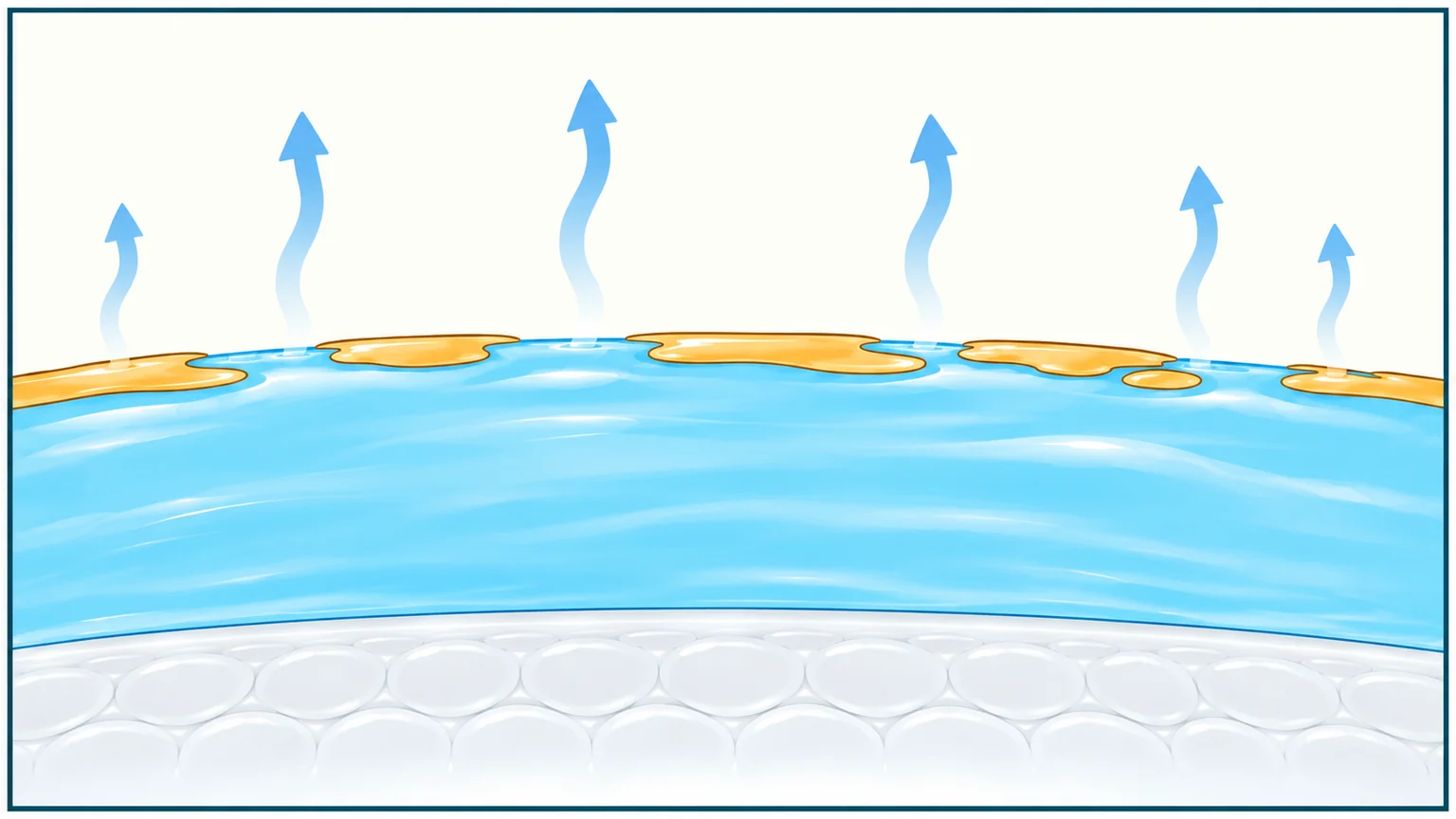
- Faster tear evaporation
When the protective lipid (oil) layer breaks up, gaps allow watery tears to evaporate faster.
Aqueous-deficient dry eye involves producing too little of the watery part of tears. Increased evaporation and reduced tear production can occur together. Read the TFOS report on dry eye classification.
For plain-language summaries of dry eye studies published each year since 2000, browse our Dry Eye Chronicle. Explore the Dry Eye Chronicle.
How the tear film protects the eye
The tear film is a thin layer of fluid that keeps the front of the eye moist and smooth. Each blink spreads it across the surface. Its watery and mucus components help moisten and coat the eye, while the oily outer layer helps slow evaporation. Read how the tear film works.
The meibomian glands in the eyelids supply most of that oil. Changes in the oil they release can affect how well the tear film spreads and stays stable. Explore the TFOS explanation of tear film. Learn about meibomian gland dysfunction.
Our tear film animation shows the oily layer spreading after a blink and the film thinning until the next one. Open the tear film animation.
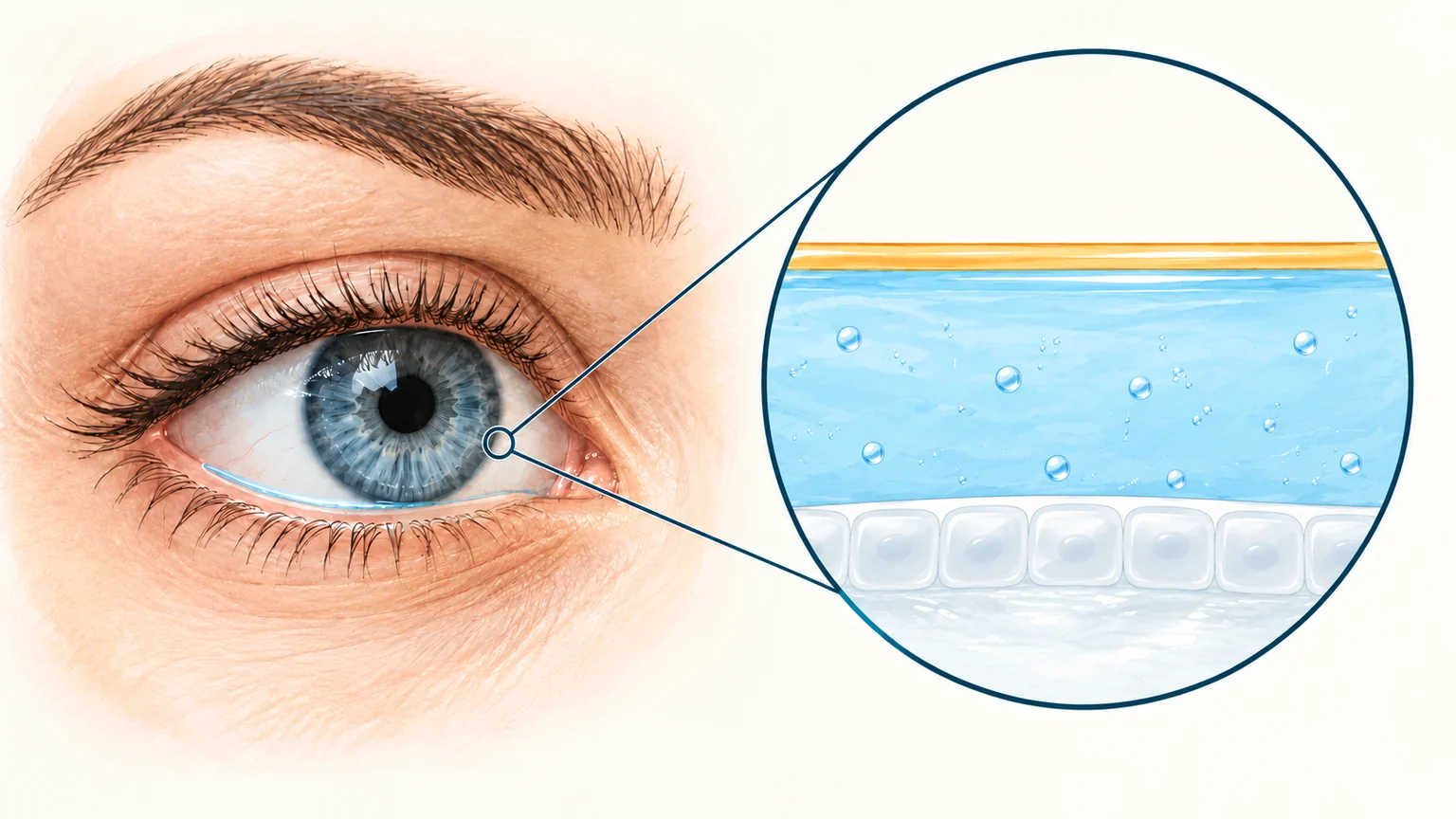
The tear film coats the cornea, the clear front surface of the eye. Its watery fluid keeps the surface moist, while mucus helps the tears spread and cling to it. A thin outer lipid (oil) layer slows evaporation.
Why blinking matters during screen work
During focused screen work, you may blink less often. Longer gaps between blinks leave more time for tears to evaporate before the next blink spreads them over the eye again. The National Eye Institute identifies reduced blinking during screen use as a contributor to dry eye. See the NEI overview of dry eye causes.
To see why the gaps between blinks matter, try our interactive tear film animation. Lengthen the time between blinks and watch the film thin until dry spots appear, then see how a complete blink spreads a fresh layer across the eye. Try the tear film animation.
A complete blink brings the upper and lower eyelids together and helps spread a fresh tear film over the eye. The American Optometric Association highlights conscious, complete blinking as a useful habit during screen use. Read the AOA explanation of complete and incomplete blinks.
Reduce direct airflow at your desk
The National Eye Institute identifies dry or windy environments as contributors to faster tear evaporation. See the NEI overview of dry eye causes.
Check whether a desk fan, heater, or air-conditioning vent blows directly toward your face. Try redirecting the airflow or moving your seat out of its path. For screen position, readable text, and lighting, our desk setup checklist covers the next adjustments. Review your desk setup.
How BlinkEasy can help
BlinkEasy tracks your blink rate during screen time, helping you notice when it drops during focused work. Its reminders encourage conscious blinking and prompt you to let your eyelids close fully and comfortably. Try BlinkEasy free for 14 days.
When a reminder appears, look away from the screen and let your eyes close and reopen comfortably, without squeezing. Adjust the reminders to fit your workday and let the app provide the prompts. Try a simple blinking break.
The daily blink report lets you compare screen time, breaks, and average blink rate across days. It can help you see how your habits change after adjusting your reminders or desk setup.
What an eye exam can show
Evaporative dry eye is a finding from an eye exam, not something you can confirm at your desk. One test described by the National Eye Institute uses a small amount of dye to show how quickly the tear film breaks up after a blink. Your eye doctor can also check the oil glands along your eyelid edges. See how eye doctors test for dry eye.