Eye health
Dry Eye Symptoms, Causes, Relief, Vitamins, and Treatments
Answers to common dry eye questions: causes, home care, eye drops, foods, vitamins, warning signs, and treatment options.
Dry eyes can burn, sting, feel gritty, water at the wrong moments, or make your vision drift in and out of focus. Symptoms that feel identical often come from very different problems on the surface of the eye, which is why lasting relief usually starts with working out what is actually going wrong rather than trying one bottle of drops after another.
It is a common complaint. An industry-funded analysis of a national health survey estimated that 6.8% of U.S. adults, about 16.4 million people, had been diagnosed with dry eye disease. The rate climbed from 2.7% of adults aged 18 to 34 to 18.6% of those 75 and older, and it was roughly twice as high in women as in men. Because that study counted people with a diagnosis, the number living with symptoms is almost certainly higher. See the U.S. prevalence estimate.
Get urgent eye care for sudden vision changes, significant eye pain, marked redness, or new light sensitivity, especially if you wear contact lenses. Everything below is general education rather than a diagnosis, and those particular symptoms need an examination rather than another home remedy. Read the warning signs.
What is dry eye
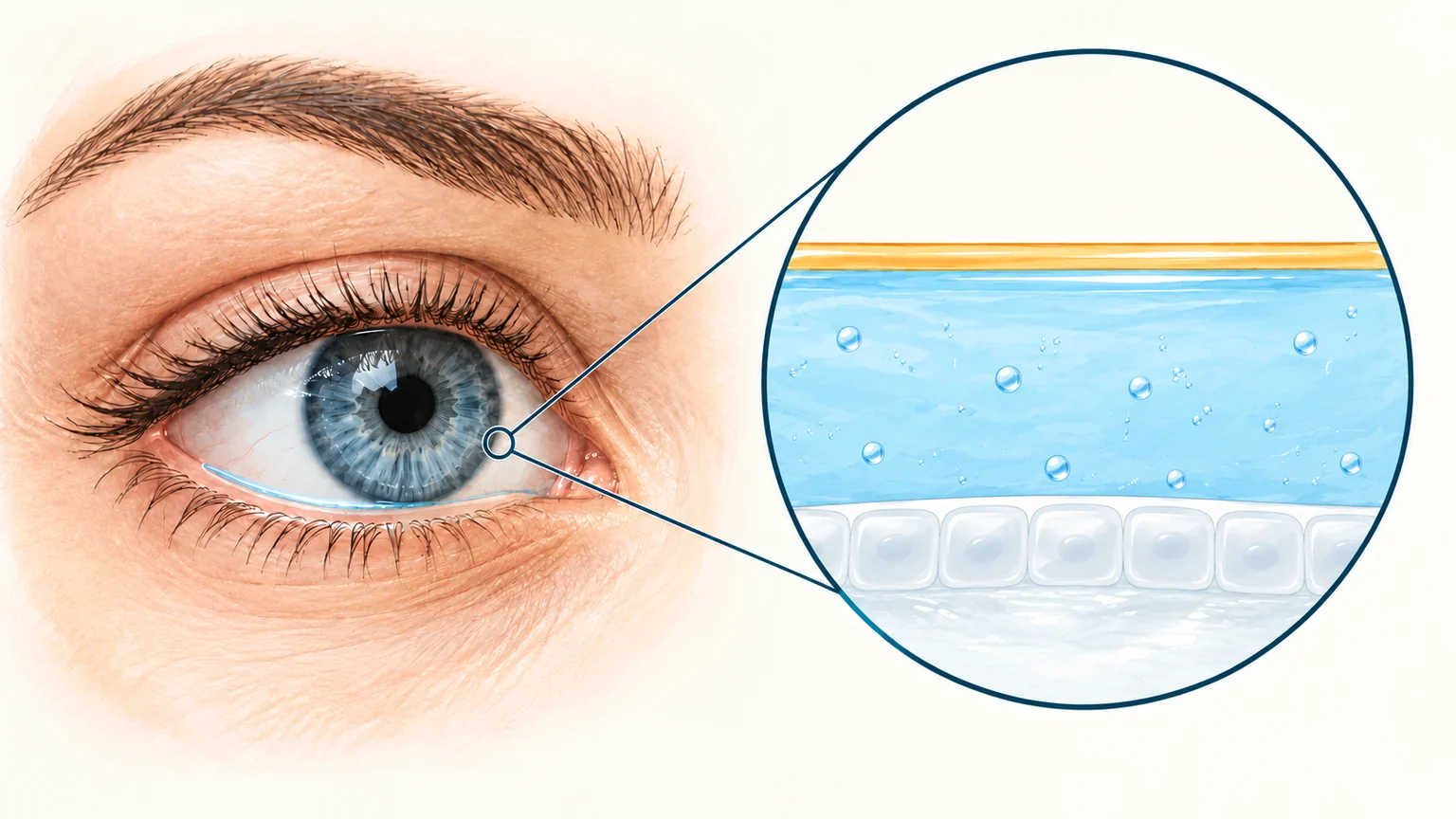
The tear film coats the cornea, the clear front surface of the eye. Its watery fluid keeps the surface moist, while mucus helps the tears spread and cling to it. A thin outer lipid (oil) layer slows evaporation.
What does dry eye feel like?
Dry eye can feel like fine sand, grit, or a stray eyelash rubbing against the eye. Burning, stinging, and a scratchy sensation are common. Some people notice tired, sore eyes or contact lenses becoming uncomfortable; others notice redness, sensitivity to light, or vision that comes and goes out of focus. See the National Eye Institute overview of dry eye symptoms.
It does not always feel dry. Irritation can trigger extra tearing, so an eye can water while its tear film is still unstable. Symptoms may be more noticeable during screen work, reading, or exposure to wind and air conditioning, but the pattern varies from person to person. Read the Mayo Clinic guide to dry eye symptoms.
These sensations alone cannot confirm dry eye: allergies, eyelid inflammation, and contact lens problems can feel similar. Persistent or recurring symptoms are a reason for an eye examination. Significant pain, marked redness, new light sensitivity, or sudden vision changes need prompt eye care. Compare conditions that can feel like dry eye. Review the warning signs that need urgent attention.
What is the biggest cause of dry eyes?
If the question needs a single answer, it is meibomian gland dysfunction, usually shortened to MGD. The meibomian glands sit in rows inside your eyelids and release the oil that forms the outer layer of your tears. When those glands clog up, shrink, or start producing thickened oil, that layer thins out and tears evaporate off the eye faster than your body can replace them. Read the international MGD workshop definition.
How dominant is it? In a study of 299 people examined at ten eye clinics in Europe and the United States, 159 dry eye patients could be sorted cleanly into a category: 79 had MGD alone, 57 had both MGD and reduced tear production, and only 23 had pure aqueous deficiency. That works out to 86% with signs of MGD. These were patients who had already sought specialist care, so the figure describes a clinic population rather than the general public, but it matches what most eye doctors encounter day to day. Read the clinic-based distribution study.
To see why the oil matters, it helps to picture the tear film: the thin coating of fluid over your eye. Its watery and mucus components keep the surface wet and evenly covered, and its outer oil layer slows evaporation. Every complete blink wipes that film back into place. If it breaks up before your next blink, patches of the surface are left exposed and start to sting. See how the tear film works.
MGD is not the whole story, though. Some people mainly produce too little of the watery part of tears, many have both problems at once, and plenty of cases are driven by something else entirely: age, hormone changes, medications, contact lenses, eyelids that do not close fully, or autoimmune disease. Long screen sessions and dry moving air rarely cause dry eye on their own, but they reliably make an already unstable tear film feel worse. See the National Eye Institute overview of causes.
Our MGD guide explains what the eyelid glands do and how they are checked.
What are the two main causes of dry eyes?
The classic split is between tears that disappear too fast and tears that are never made in sufficient quantity. The two are usually called evaporative dry eye and aqueous-deficient dry eye.
-
Evaporative dry eye: Tears leave the surface too quickly even though the eyes produce enough watery fluid. A weak oil layer from MGD is the usual culprit, and incomplete blinking or dry, moving air speeds the loss along.
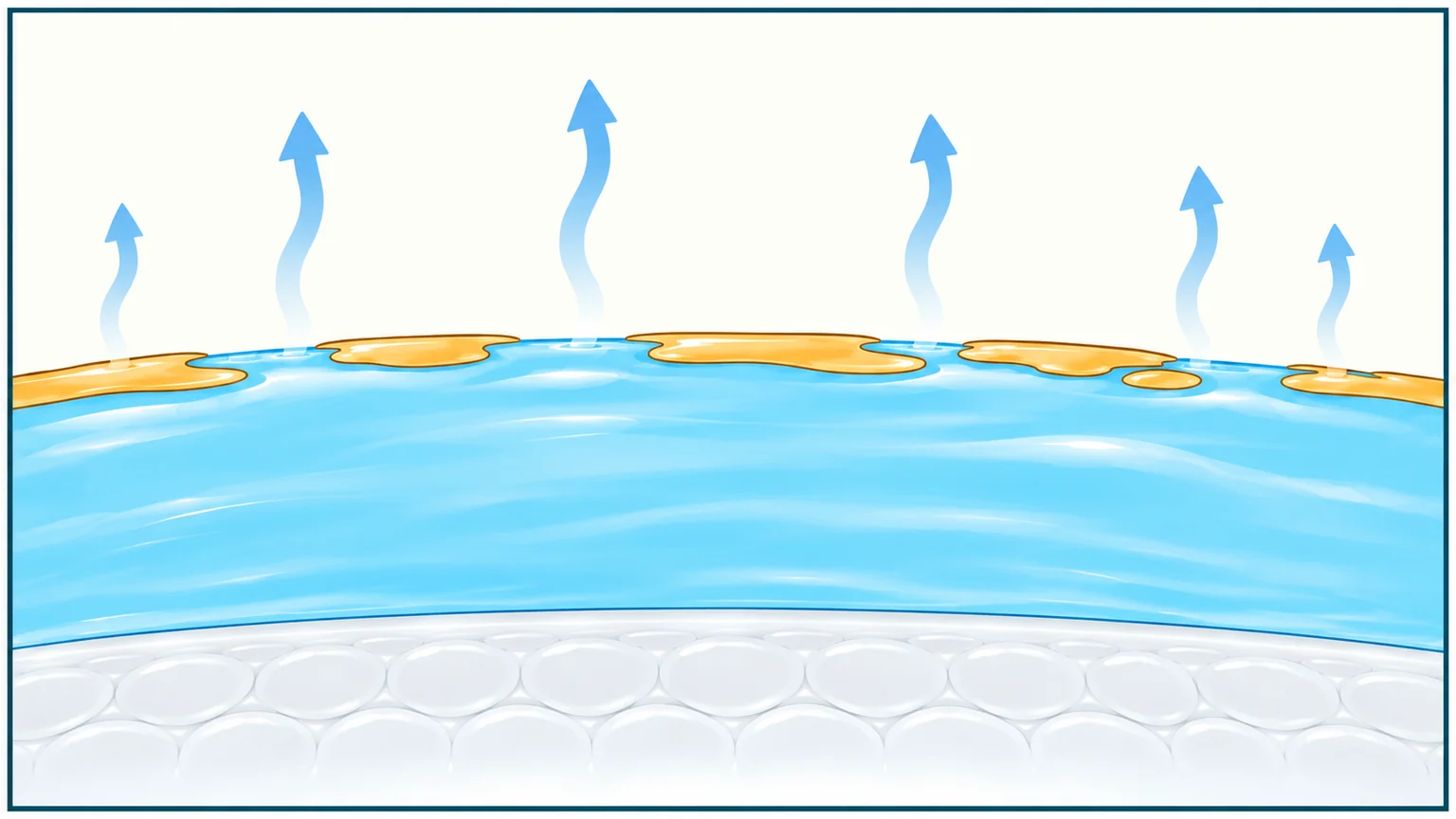
- Faster tear evaporation
When the protective lipid (oil) layer breaks up, gaps allow watery tears to evaporate faster.
- Aqueous-deficient dry eye: The lacrimal glands supply too little watery fluid. Causes include Sjögren disease, other conditions that damage gland tissue, certain medications, and age-related decline in tear production.
In practice the categories blur. The American Academy of Ophthalmology notes that the two forms coexist in the majority of patients, so treating only one of them often leaves symptoms behind. Read the AAO Dry Eye Syndrome Preferred Practice Pattern.
Specialists have also moved past the two-box model. The 2025 TFOS DEWS III report replaced it with a longer list of drivers that can be identified individually: tear film deficiencies in the lipid, aqueous, or mucin layer; eyelid problems with blinking, closure, or the lid margin; and ocular surface abnormalities including nerve dysfunction, cell damage, and primary inflammation. The point of the change is practical. Naming the specific driver in front of you leads to a better treatment choice than picking one of two labels. Read the TFOS DEWS III diagnostic report. Compare the earlier TFOS classification. Learn more about tear evaporation and blinking.
What is the root cause of dry eyes?
There is no single root cause that applies to everyone, and that is the most useful thing to know about the question. The TFOS DEWS III panel defines dry eye as a multifactorial, symptomatic disease marked by a loss of homeostasis of the tear film and the ocular surface, with tear film instability and hyperosmolarity, surface inflammation and damage, and neurosensory abnormalities acting as the underlying factors. Multifactorial is the operative word: in one person the starting point is blocked oil glands, in another it is reduced tear production, eyelid exposure, a medication side effect, or an autoimmune condition. Read the TFOS DEWS III definition.
Whatever starts it, the mechanism that keeps it going tends to look the same. Once the tear film becomes unstable, evaporation concentrates the salts left behind, so the remaining tears become saltier than the surface cells can comfortably tolerate. That hyperosmolarity irritates and inflames the surface, inflammation damages the cells and glands that were supposed to maintain the tear film, and the film becomes less stable still. Clinicians call it the vicious cycle of dry eye, and it explains why removing one trigger does not always settle established disease. Read the TFOS report on how dry eye develops.
So a productive conversation with an eye doctor asks two things: what started this in my case, and which parts of the cycle are still turning. A broad label such as dehydration or too much screen time usually leaves the examination findings unexplained. Explore how blinking and evaporation affect the tear film in our animation.
What makes dry eyes worse?
The National Eye Institute lists windy, smoky, and dry environments alongside long stretches of screen use as the everyday aggravators, and it also names the big medical ones: being 50 or older, being a woman, hormone changes from pregnancy or menopause, diabetes, thyroid problems, autoimmune disease, laser eye surgery, and some medications for colds, allergies, depression, and high blood pressure. Read about common dry eye contributors.
Day to day, the things most people can actually change are these:
- Air blowing at your face. A desk fan, a car vent, an overhead air-conditioning diffuser, or a plane cabin will strip tears off the surface faster than still air.
- Low humidity. Winter heating and air conditioning both dry indoor air, and symptoms often track the season rather than anything you did differently.
- Smoke and airborne irritants, including secondhand smoke and wildfire haze.
- Long unbroken periods of close concentration, whether that is spreadsheets, reading, sewing, or gaming.
- Contact lens wear, especially late in the day or past the replacement schedule.
- Preserved eye drops used many times a day. Benzalkonium chloride, a preservative in many bottles including some glaucoma drops, is itself a recognized risk factor for surface irritation.
Screen work deserves a closer look, because the popular explanation is only half right. It is true that blinking changes when you concentrate, and the NEI notes that long periods on a screen can reduce blinking. But the more consistent finding is about blink quality, not blink count. In a study of 25 people reading the same text on a screen and on paper, average blink rates were similar while a larger share of the screen blinks were incomplete, stopping before the eyelids met. An incomplete blink leaves the lower part of the eye without a freshly spread tear film, so trying to blink faster can completely miss the problem. Read the screen-versus-paper blinking study. Read the AOA explanation of complete blinking. Learn about incomplete blinks.
The timing of symptoms is useful information, but it does not identify the cause on its own. Symptoms during screen work, on waking, or after putting in contacts can have several explanations. An eye doctor can consider those patterns alongside your history and examination findings. Bring your full medication list to an eye appointment, including over-the-counter antihistamines and eye drops, but do not stop a prescribed medicine without talking to whoever prescribed it.
Use our guide to dry eyes at the computer to review your screen habits and surroundings. See what the evidence says about the 20-20-20 rule.
What is your body lacking when you have dry eyes?
Usually nothing that a supplement would fix. The shortfall is local, on the surface of your eye, rather than systemic. Depending on the case, what is missing is watery tear fluid, a functioning oil layer, enough mucin to keep the film spread evenly, or healthy surface cells and nerves to coordinate the whole system. Inflammation and altered nerve signaling make all of those worse. Read the TFOS DEWS III explanation of dry eye and diagnosis.
There is one thing your tears often have too much of rather than too little: salt. As water evaporates from an unstable film, the salts stay behind and the tears become hyperosmolar. Eye doctors can measure this, and it is one reason the eye surface becomes inflamed even though nothing about your diet has changed.
Dehydration or a genuine nutritional deficiency can play a part in some people, but dryness by itself cannot tell you whether either is present. Dry eyes alongside a persistently dry mouth, joint pain, or unusual fatigue deserve a broader medical conversation. Buying a supplement before anyone has identified the cause mainly delays more useful care.
Warning signs and getting a diagnosis
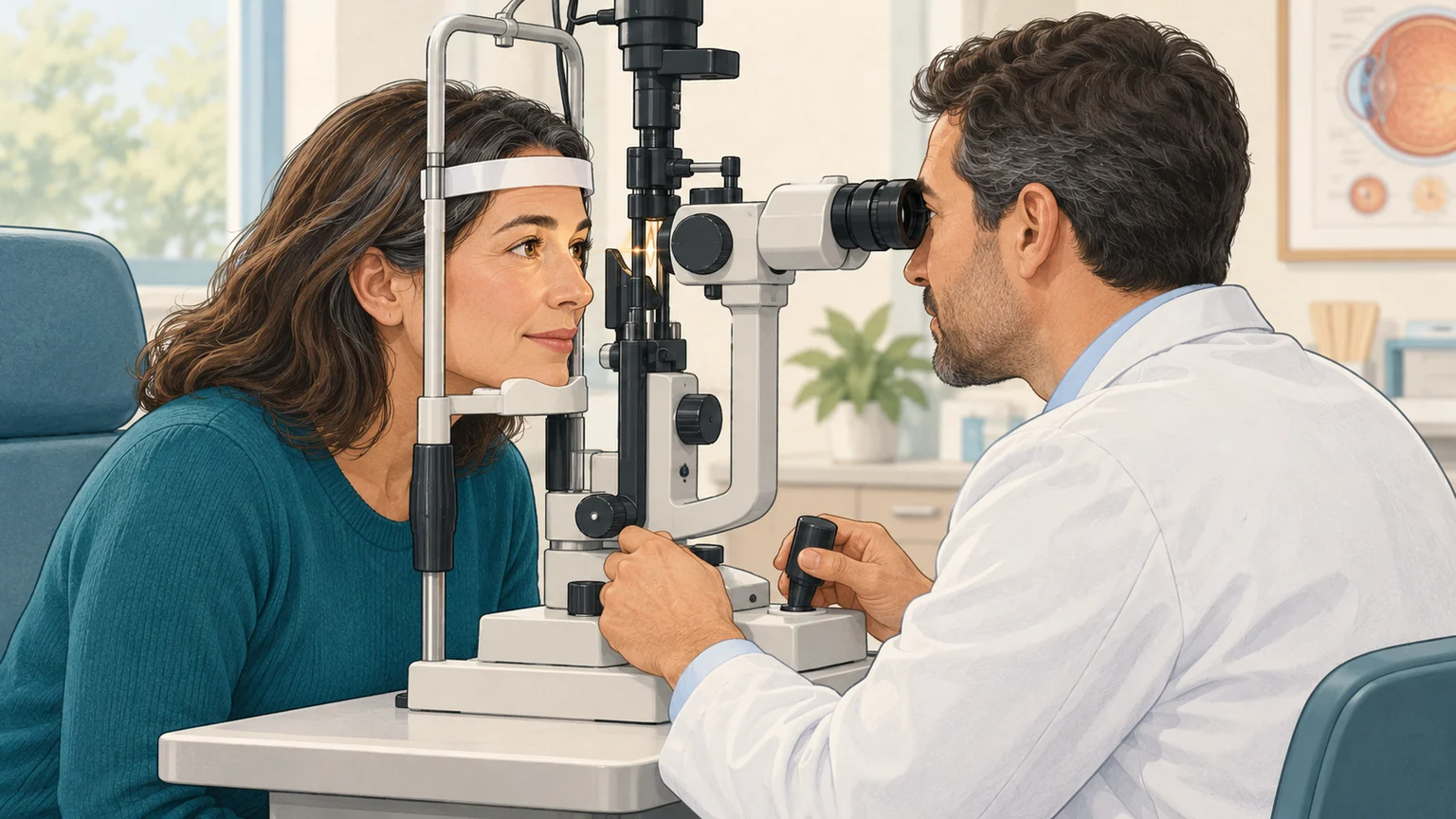
An eye examination can assess the eye surface, eyelids, and tear film.
How do you know if dry eyes are serious?
Seek urgent eye care for significant pain, marked redness, light sensitivity, a new reduction in vision, or sudden symptoms mainly in one eye. Sudden vision loss is an emergency. A painful red eye in a contact lens wearer needs same-day assessment, because a corneal infection can threaten sight within days.
If you wear contacts, take them out when any of those symptoms appear and leave them out while you wait for advice. Do not reach for leftover antibiotic, steroid, or numbing drops to get through it; numbing drops in particular mask the pain that would otherwise tell you how bad things are, and repeated use damages the cornea. Read the NEI contact lens warning signs.
MedlinePlus also lists flaking or discharge, a sore on the eye or eyelid, an eye injury, bulging eyes, a drooping eyelid, and symptoms that do not improve with self-care within a few days as reasons to contact a clinician. Joint pain, swelling, or stiffness occurring together with dry eyes and a dry mouth is worth reporting too. See when to contact a medical professional.
Short of those warning signs, the reassuring news is that most people with dry eye have discomfort without vision loss. Still, arrange an eye exam when dryness persists, interferes with reading, driving, or work, or has you reaching for drops several times a day. One caution about judging severity by feel: symptom intensity and surface damage do not always rise together, and some of the most damaged corneas belong to people whose nerves have become less sensitive and who therefore complain least.
What can be mistaken for dry eye?
Quite a lot, which is why self-diagnosis goes wrong so often. Conditions that routinely get mislabeled as dry eye include:
- Allergic eye disease, where itching usually dominates and symptoms follow a season or an exposure.
- Blepharitis along the lash line, including Demodex blepharitis, which leaves waxy collarettes at the base of the lashes.
- Conjunctivitis from a virus or bacteria, which more often produces discharge and a sticky lid in the morning.
- Contact lens problems: a poor fit, an aging lens, a solution sensitivity, or deposits on the lens surface.
- A corneal scratch, a retained foreign body, or recurrent corneal erosion, which typically hurt sharply and may wake you at night.
- Uncorrected or outdated glasses, where the real problem is focusing effort rather than the tear film.
- Eyelid positions that leave the eye exposed, such as lid retraction in thyroid eye disease or incomplete closure during sleep.
Prominent itching points toward allergy and discharge points toward infection, but neither clue is reliable enough to diagnose yourself, and more than one condition is frequently present at the same time. DEWS III treats differential diagnosis as a required step rather than an afterthought, precisely because the overlap is so large. Read the TFOS guidance on distinguishing dry eye from other conditions.
Clinicians may consider abnormal corneal nerve signaling when burning or pain is more severe than examination findings seem to explain. Nerve-related pain and dry eye can coexist, and poor relief from lubricants alone does not establish either diagnosis. Persistent eye pain is real and deserves evaluation, even when the eye looks relatively normal.
Compare dry eye with digital eye strain. A painful red eye, light sensitivity, or a new change in vision needs prompt examination rather than an assumption that it is ordinary dryness.
How to test for dry eyes at home?
You can gather genuinely useful information at home, but you cannot confirm dry eye or identify its cause yourself. What is worth recording:
- Which sensations you get, and in which words: burning, grittiness, a foreign-body feeling, aching, watering, or itching.
- When symptoms appear, and whether they build through the day, peak on waking, or follow a specific activity.
- Whether one eye or both are involved. One-sided symptoms make simple dry eye less likely.
- Whether vision blurs and then clears for a moment after you blink, which suggests an unstable tear film rather than a focusing problem.
- Your environment and habits: airflow, humidity, screen hours, contact lens wear, and every drop or medication you use.
Validated symptom questionnaires exist and are the same tools clinicians use. The Ocular Surface Disease Index and the SPEED questionnaire are the common ones, and DEWS III recommends a short six-item version of the OSDI as a screening instrument, with a score of 4 or higher as the threshold. That is still only half of a diagnosis, though: DEWS III requires a positive symptom score plus an objective sign, such as a non-invasive tear breakup time under 10 seconds, elevated tear osmolarity, or visible staining of the surface. A questionnaire score alone tells you that you have symptoms, which you already knew. See the DEWS III diagnostic criteria.
Two home tests to skip. Do not improvise a Schirmer test with paper towel or filter paper; the real test uses sterile calibrated strips and still needs interpretation. And do not hold your eyes open to time how long they take to sting, which measures your tolerance for discomfort rather than your tear film. Counting your blinks can reveal a screen habit, but a count cannot show whether your lids are closing completely or whether your tears are stable.
An examination adds what you cannot get at home: a magnified look at the lid margins and gland openings, expression of the meibomian glands to see what comes out, measurement of tear volume and breakup time, osmolarity testing, and dye staining that reveals damage to the surface. Those findings are what separate dry eye from the conditions that feel the same. See how dry eye is tested in the office.
Dry eye and other health conditions

Your symptoms, medical history, and medications help guide the evaluation.
What disease is associated with dry eyes?
Sjögren disease is the association that matters most, especially when dry eyes come with a persistently dry mouth. It is an autoimmune disease in which immune cells infiltrate the glands that produce tears and saliva, so both dry up together. It can occur on its own or alongside another autoimmune condition such as rheumatoid arthritis or lupus, and it is far more common in women than in men. Because the dryness develops gradually, many people are diagnosed years after their first symptoms. Read the NIAMS overview of Sjögren disease.
Other recognized associations include thyroid disease, diabetes, rosacea, graft-versus-host disease, and the eyelid conditions blepharitis and MGD. Dry eye also appears frequently after refractive and cataract surgery, and alongside long-term use of preserved eye drops.
An association is not a diagnosis. Dry eye alone does not establish an autoimmune disease or tell you whether testing is needed. A clinician considers the rest of the picture: your other symptoms, your medical and family history, your medications, and what the examination finds. Review health conditions that can contribute to dry eye.
Can dry eyes be a symptom of something else?
Yes, and often of something unremarkable rather than something ominous. The possibilities worth knowing about fall into a few groups:
- Autoimmune and systemic disease: Sjögren disease, rheumatoid arthritis, lupus, thyroid disease, diabetes, rosacea, and graft-versus-host disease after a stem cell transplant.
- Medications: antihistamines, decongestants, many antidepressants, some blood pressure medications and diuretics, hormonal therapies, isotretinoin for acne, and preserved eye drops used long term.
- Eye surgery and procedures: LASIK, PRK, cataract surgery, and some eyelid surgery can reduce tear production or corneal nerve signaling, usually temporarily.
- Eyelid and blink problems: blepharitis, MGD, lids that do not close fully in sleep, facial nerve weakness such as Bell palsy, and the reduced blink rate seen in Parkinson disease.
- Local causes: contact lens wear, chronic allergy, and long-standing use of redness-relieving drops.
Tell your clinician about a persistently dry mouth, dental decay or swallowing difficulty related to dryness, joint pain or swelling, unusual fatigue, and when your symptoms began relative to a new medication or a surgery. Sjögren disease affects far more than the eyes, so that wider history genuinely changes what gets investigated. It does not follow that everyone with dry eyes needs autoimmune blood tests. Learn about Sjögren symptoms and evaluation.
Most people turn out to have several ordinary contributing factors rather than one hidden disease. Start with an eye exam and let the findings decide whether primary care or a rheumatologist should be involved. The aim is to treat the eye surface while also addressing anything systemic that is driving it.
Relief and self-care

Use a screen pause for comfortable, complete blinks, and keep direct airflow away from your face.
How do I make dry eyes go away?
Match the treatment to the cause, and be realistic that drops alone often will not do it. The AAO guideline makes the point bluntly: tear replacement is frequently unsuccessful as the sole treatment when the other contributing factors are not addressed at the same time. Persistent symptoms usually need the eyelid disease, inflammation, low tear production, or incomplete lid closure treated as well. Read the AAO Dry Eye Syndrome Preferred Practice Pattern.
- Remove the obvious aggravators first: airflow at your face, very dry indoor air, smoke, and hours of screen use without a break. Use your breaks for a few gentle, complete blinks so your tears are actually redistributed.
- Artificial tears are commonly used for mild dry eye. Preservative-free formulations avoid repeated exposure to preservatives, which can irritate a sensitive eye surface. Product choice depends on your symptoms, eye surface, and any contact lens use; the label explains how a particular product can be used.
- Arrange an eye exam if symptoms persist, interfere with reading or driving, or require frequent drops. Bring every product and medication you use, including supplements.
- Treatment response varies with the cause and the treatment. Your clinician can explain when improvement might appear, when to review the plan, and which symptoms or side effects need earlier attention.
Guidelines organize the rest of the options into steps, moving on only when the previous ones are inadequate. Step one is education, environmental changes, reviewing medications that dry the eyes, ocular lubricants, and warm compresses with lid hygiene. Step two adds preservative-free lubricants, treatment for Demodex if present, tear conservation with punctal plugs or moisture-chamber glasses, overnight ointments, in-office heating and expression of the meibomian glands, and prescription drugs: short-course topical steroids, cyclosporine, lifitegrast, perfluorohexyloctane, varenicline nasal spray, or oral tetracycline-class or macrolide antibiotics. Step three brings blood-derived drops such as autologous serum and therapeutic contact lenses including rigid scleral lenses. Step four covers longer-term steroids, amniotic membrane grafts, surgical punctal closure, and other surgery. Where you start depends on your findings and severity rather than on a fixed sequence. See the TFOS DEWS III management and therapy report.
How to clear dry eyes naturally?
Changes to your surroundings and habits can meaningfully reduce mild symptoms, particularly when screens or dry air are doing the damage. They support the tear film; they do not replace treatment for significant inflammation, gland disease, or an underlying health condition.
- During a screen break, look away, close your eyes gently until the lids meet, then let them open naturally. Repeat a few times without squeezing or pressing on your eyes.
- Redirect fans and vents away from your face, avoid smoke, and consider a humidifier in a dry room. Clean it on the schedule in its manual, because a neglected humidifier sprays microbes into the air.
- Wear wraparound sunglasses outdoors to cut wind exposure, and consider moisture-chamber glasses if wind is a major trigger.
- Lower your monitor slightly. When a screen sits a little below eye level, your eyelids cover more of the eye surface than when you look up at it.
- If your eye care professional recommends warm compresses for MGD, use comfortable warmth over closed lids for the time they specify, then follow it with the lid massage or cleaning they taught you. Warmth alone softens the oil; something still has to move it out of the gland. Do not use scalding water, and do not press hard on your eyes.
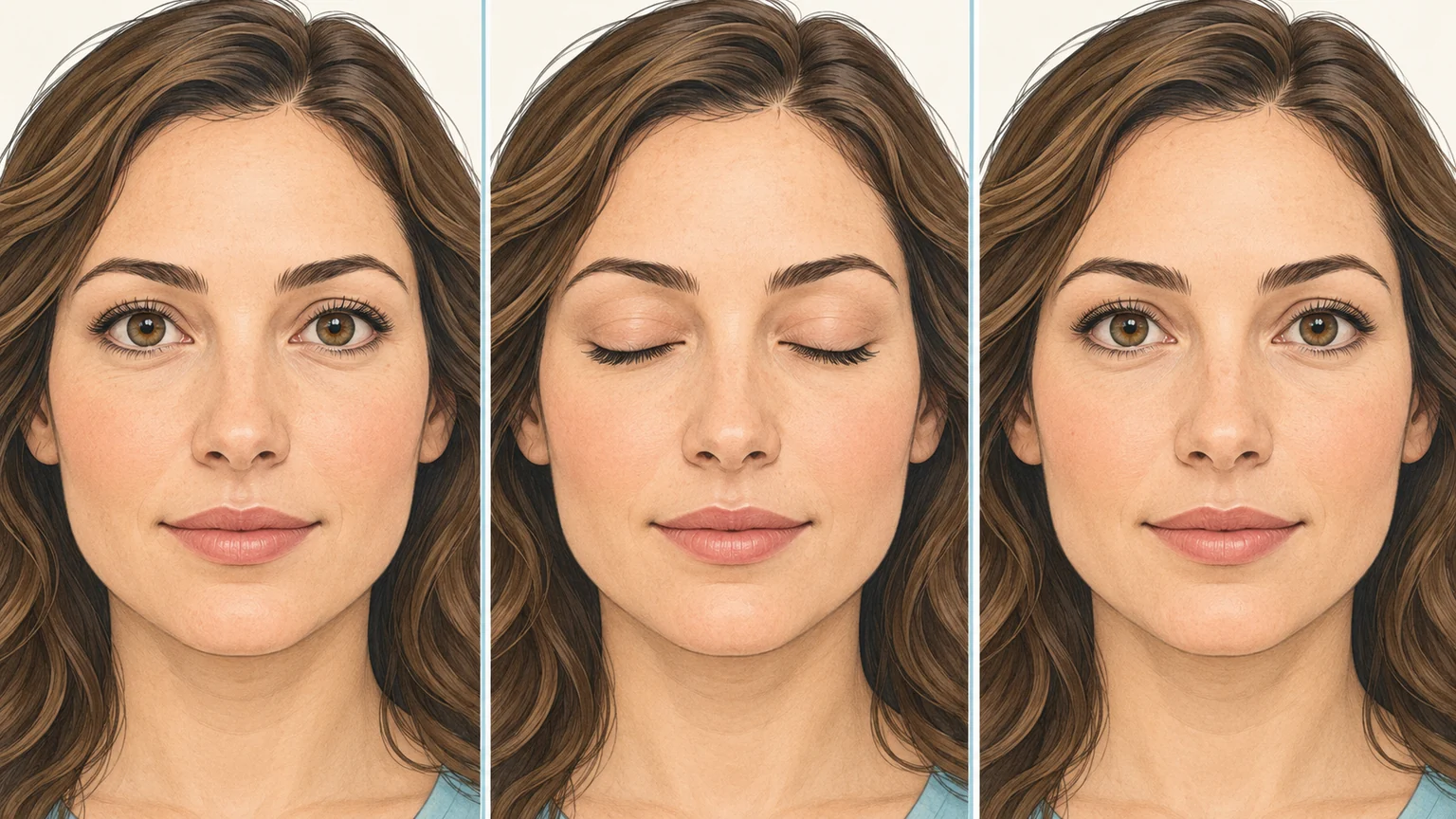
- Open naturally
- Close completely
- Reopen gently
Let your eyelids meet comfortably, then reopen naturally without squeezing.
Blink training has the most direct evidence of any self-care habit here. In a randomized trial of 100 people with dry eye, one group performed blinking exercises after instilling artificial tears five times a day for three days while the other group used the drops alone. The exercise group ended up with better symptom scores, longer tear breakup times, fewer incomplete blinks, and a wider eyelid opening. Three days is very short, so the study shows that deliberate blinking changes measurable things quickly, not that the benefit lasts. A separate four-week study pointed the same way but had no untreated comparison group. Read the blink-training trial. Explore blinking exercises and the evidence.
Two cautions about natural remedies. Warm compresses address eyelid oil problems specifically and do nothing for low tear production, so they are not a universal answer. And nothing from your kitchen or bathroom cabinet belongs in your eye. The FDA warns against eye products containing ingredients unsuited to the eye, naming silver sulfate, MSM, honey, and CBD, and advises avoiding homeopathic eye products. Anything used as an eye drop needs to be sterile and made for that purpose. Read NEI advice on eyelid care. Read FDA guidance on eye drop safety.
How can I quickly rehydrate my eyes?
Lubricating drops wet the eye surface directly and may provide temporary relief from mild dryness. A screen break, moving out of direct airflow, and a few gentle, complete blinks may also improve comfort by helping the tear film spread again. Looking into the distance relaxes focusing effort. The amount and duration of relief vary, and none of these measures identifies the cause of recurring symptoms.
Take contact lenses out if they are uncomfortable rather than adding drops over the top of them, and check the label before using any product with lenses in, since thicker gels and some lipid drops are not meant for lens wear. Drinking a large glass of water will not repair an unstable tear film in the next ten minutes.
Tap water and homemade saline are not substitutes for sterile dry-eye lubricants. Keep tap water away from contact lenses and lens cases: it can carry Acanthamoeba, an organism that causes a rare but devastating corneal infection in lens wearers. If relief lasts only a few minutes, or you find yourself needing drops more and more often, that pattern is itself a reason to get examined. See the NEI overview of lubricants and lifestyle changes.
Chemical exposure is a different situation: flush the eye immediately with plenty of water and seek urgent medical attention. Read CDC/NIOSH first-aid guidance for chemical eye exposure.
What not to do with dry eyes?
Avoid the habits that irritate the surface further or paper over a problem that needs attention:
- Do not rub irritated eyes or squeeze your eyelids forcefully. Rubbing feels good for a second and leaves the surface worse.
- Do not push through pain, redness, or blurred vision in contact lenses. Take them out and get advice if symptoms continue.
- Some redness-relieving drops contain decongestants such as tetrahydrozoline, which temporarily narrow surface blood vessels without addressing the causes of dry eye. Repeated use can cause rebound redness. These products are not a substitute for dry eye care or an evaluation of persistent redness.
- Do not share drops with anyone, let the bottle tip touch your eye, lashes, or fingers, or reuse a single-use vial after the label says to discard it.
- Do not keep using a bottle past its discard date, and do check FDA alerts and recalls for your product. A 2023 outbreak traced to a contaminated imported artificial tear sickened 81 people across 18 states with a drug-resistant bacterium, causing vision loss and deaths. That was a manufacturing failure rather than a reason to avoid preservative-free drops, but it is a good reason to buy from a reputable source and pay attention to recalls.
- Do not use leftover steroid or numbing drops, and do not stop a prescribed medication on your own because you suspect it is drying your eyes. Raise it with the prescriber instead.
- Do not ignore worsening pain, new light sensitivity, or any change in vision.
The short version: use a lubricant for lubrication, and get persistent redness explained rather than cosmetically removed. Drops that make your eyes look whiter do nothing for your tear film, and redness occasionally signals something that needs treatment, such as uveitis. Read the AAO explanation of redness-relieving drops. See the CDC notice on the contaminated artificial tears outbreak. Review contact lens warning signs.
How can an app for dry eye help?
An app cannot diagnose or treat dry eye, and it is worth being clear about that first. What it can do is work on the habit that screen work quietly erodes: blinking. BlinkEasy uses your webcam to track how often you blink and nudges you when your rate drops below the target you set, so you notice the habit in the moment rather than at the end of a long afternoon.
Use each prompt for a few gentle, complete blinks, letting your eyelids actually meet. That matters more than blinking quickly, because an incomplete blink leaves the lower part of the eye without a freshly spread tear film. Screen-break reminders cover the other half of the habit by prompting regular pauses away from the display. See why complete blinks matter.
Think of it as support for the environmental and behavioral step of dry eye care, which is where published guidelines also start, alongside whatever treatment your eye doctor recommends. If your symptoms persist despite better blinking habits, that is useful information to bring to an appointment rather than a reason to keep adjusting the app. See how BlinkEasy works.
Eye drops and medical treatment
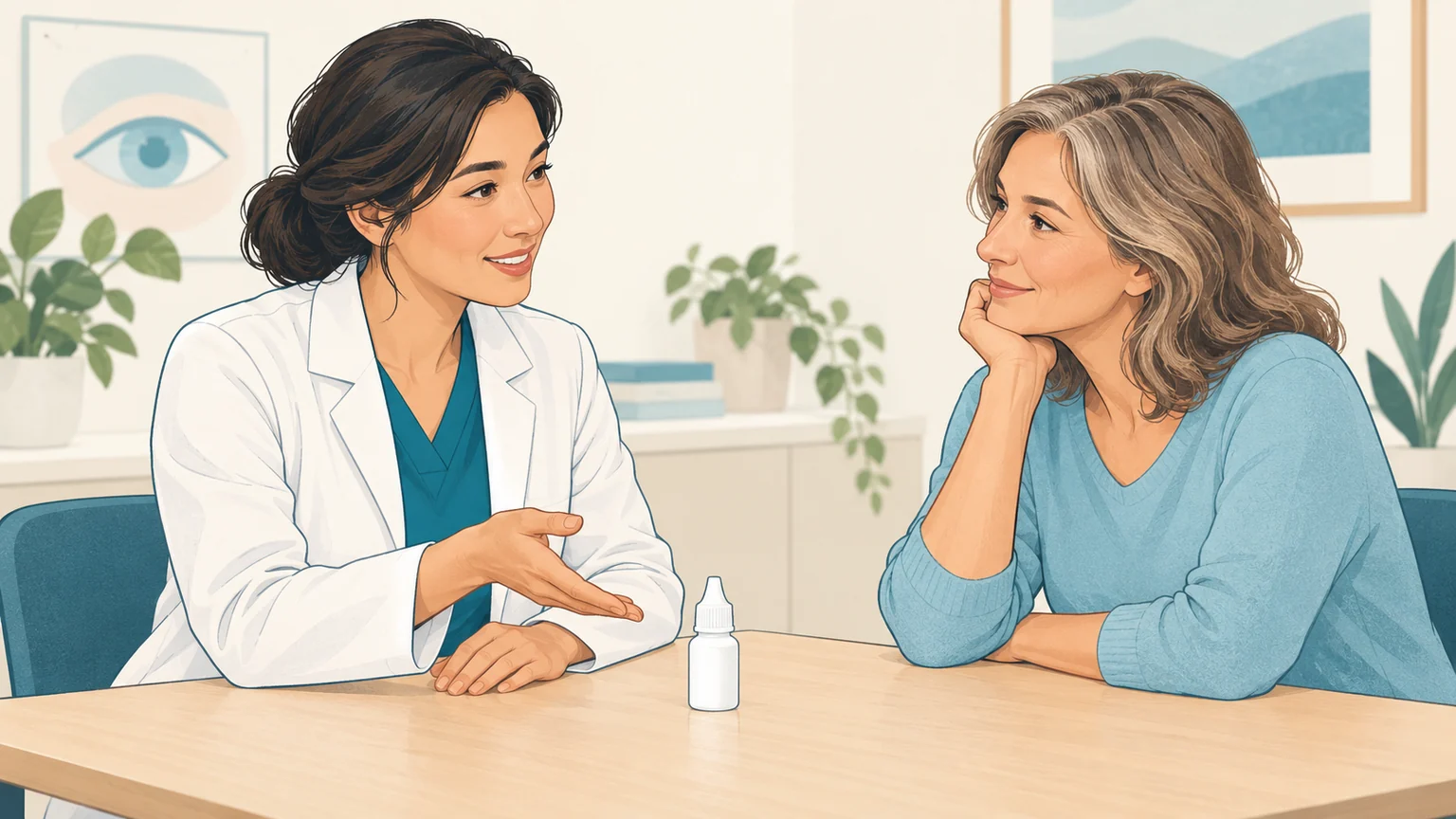
Treatment choices depend on the examination findings and how your eyes respond.
What eye drops are best for dry eyes?
For mild dry eye, look for a product labeled artificial tears or lubricating eye drops rather than anything promising to get the red out. The common active lubricants are carboxymethylcellulose, hypromellose, polyethylene glycol, propylene glycol, glycerin, and sodium hyaluronate, often combined with trehalose or another protective ingredient.
There is no best-in-class bottle, and the research is surprisingly clear about that. A Cochrane review pooled 43 randomized trials covering 3,497 people with dry eye and concluded that over-the-counter artificial tears appear safe and effective, that most of them seem to have broadly similar efficacy, and that the evidence is of low quality because of inconsistent trial designs and poor outcome reporting. Head to head, it was largely impossible to show that one formulation beat another or even placebo. So the ingredient list cannot identify the right bottle for you; how a product feels on your particular surface, how long it lasts, and how often you need it matter more. Read the Cochrane review of artificial tears.
What does help narrow the choice:
- Preservatives. Preserved drops are generally fine for mild dry eye and an otherwise healthy surface. Once you need drops frequently and long term, guidelines recommend preservative-free, which comes in single-use vials or multidose bottles with a preservative-free delivery system.
- Consistency. Thin drops are comfortable and brief; gels last longer; ointments last longest and can blur vision considerably.
- Lipid content. A lipid-containing or oil-based drop targets a weak oil layer and may suit evaporative dry eye better than a plain watery drop.
- Contact lens compatibility. Check whether the label permits use with lenses in place, which many thicker products do not.
Prescription drops do different jobs and are not simply stronger versions of artificial tears. Some reduce inflammation, such as cyclosporine and lifitegrast; some stimulate tear production, such as acoltremon drops or varenicline nasal spray; and one, perfluorohexyloctane, works by limiting evaporation. Those are chosen on the basis of what an examination finds, not ranked from weakest to strongest. Follow the label and your clinician instructions, and do not substitute redness relief for lubrication. See the TFOS DEWS III report on treatment options.
What is the best lubricant for very dry eyes?
There is no single best lubricant, but options for severe dryness include preservative-free artificial tears, gels, and eye ointments. Only ever use products labeled for use in the eyes.
The AAO guideline addresses repeated exposure to preservatives. Tear substitutes with preservatives may be sufficient for mild dry eye with an otherwise healthy ocular surface, but when tear substitutes are used frequently and chronically, nonpreserved tear substitutes are generally recommended. The reason is cumulative preservative toxicity: the very surface you are trying to protect takes the hit. Read the AAO Dry Eye Syndrome Preferred Practice Pattern.
Beyond that, fit the product to the problem. If a weak oil layer is driving evaporation, a lipid-containing lubricant is worth discussing. If your surface is sensitive or inflamed, even a product marketed for dry eye can sting, and a different formulation may be tolerated better. Thicker is not automatically better, because blurred vision has its own costs during the day.
Frequent need for lubricants or sticking on waking can be reasons for reassessment. Lubricants may relieve symptoms without addressing every contributing factor. Depending on the examination findings, clinicians may consider treatments such as anti-inflammatory drops, punctal plugs, in-office gland treatment, autologous serum drops, or scleral lenses that hold a reservoir of fluid against the cornea. These options address different problems, so the choice depends on the individual assessment.
Nutrition, vitamins, and supplements

A varied diet supports normal nutrition; no single food or drink is a dry eye cure.
What vitamins help with dry eyes?
Replacing vitamin A helps when a true vitamin A deficiency is causing eye disease. Beyond that specific situation, the evidence for taking vitamins to treat dry eye is thin. A 2026 systematic review searched five databases for trials of oral vitamin supplementation in dry eye and found 13 eligible studies, covering vitamins A, B1, B12, and D. Not one was judged to be of high quality. The reviewers concluded that the available evidence is limited by poor control, inadequate sample sizes, very short follow-up, and inconsistent dosing. Read the 2026 systematic review of oral vitamins in dry eye.
Vitamin D is the one with the most activity behind it, and it is worth understanding what that evidence does and does not show. Observational studies repeatedly link low vitamin D levels to more dry eye symptoms, and a 2024 meta-analysis of eight studies covering 439 patients reported improvements in tear production, lid redness, and symptom scores after supplementation. Most of those studies compared patients before and after treatment rather than against a placebo group, and the benefit was concentrated in people who actually had low vitamin D levels or disease that had not responded to standard treatment. These findings do not establish a routine screening or supplementation strategy for dry eye. A clinician can assess whether nutritional testing is appropriate based on your health history and risk factors. Read the vitamin D meta-analysis.
A practical note: an eye supplement formulated for age-related macular degeneration, such as an AREDS2 formula, was designed for a completely different disease of the retina. It has never been shown to treat dry eye, and some of these products contain enough preformed vitamin A or zinc to matter if you are also taking other supplements. Correct a documented deficiency with your clinician rather than stacking several high-dose products based on symptoms alone.
Omega-3 fatty acids come up constantly in this context, and they are fats rather than vitamins, but two large randomized trials are worth knowing about. In the NIH-funded DREAM trial, 535 people with moderate to severe dry eye took either 3,000 mg of fish-derived EPA and DHA or an olive oil placebo for a year. Both groups improved by a similar amount, and the difference between them was not significant on symptoms, corneal staining, tear breakup time, or Schirmer testing. The VITAL trial then tested prevention: 23,523 U.S. adults without dry eye took 1 g of marine omega-3 or placebo for a median of 5.3 years, and the supplement did not reduce the number of people who went on to be diagnosed. Taken together, these results argue strongly against promising that fish oil will fix or prevent dry eye. Read the DREAM treatment trial. Read the VITAL prevention trial. See the broader TFOS nutrition review (PDF).
What vitamin are you lacking if you have dry eyes?
Vitamin A is the honest answer to the underlying question, with an important caveat attached: vitamin A deficiency can cause severe dry eye, but having dry eyes almost never means you are deficient. The NIH Office of Dietary Supplements describes vitamin A deficiency as rare in the United States, because most people get enough from ordinary food. See the NIH vitamin A fact sheet.
When deficiency does occur, it does not present as mild afternoon grittiness. It causes xerophthalmia: a drying and thickening of the conjunctiva and cornea that can progress to ulceration and permanent vision loss, usually with trouble seeing in dim light appearing first. The people genuinely at risk have a reason to be, such as severe malnutrition, chronic liver disease, cystic fibrosis, inflammatory bowel disease, bariatric surgery that limits fat absorption, or a very restricted diet.
Do not diagnose a deficiency from dryness alone, and do not start high-dose vitamin A on your own. Preformed vitamin A accumulates in the body and is toxic in excess; the tolerable upper intake level for adults is 3,000 mcg of retinol activity equivalents per day from supplements and animal-source foods, and high intakes during pregnancy can cause birth defects. Tell your clinician about a highly restricted diet, weight-loss surgery, intestinal disease, or changes in night vision, so any testing is aimed at your actual situation. Review vitamin A requirements and the risks of excessive intake.
What vitamin stops dry eyes?
None. No vitamin has been shown to stop dry eyes, and the research that exists is not close to supporting that claim. Vitamin A is essential for a healthy eye surface, but adding more does nothing extra once your intake and absorption are already adequate, and high doses of preformed vitamin A carry real risks. The 2026 review of oral vitamin supplementation in dry eye found no high-quality trial for any vitamin, which is a very different situation from a treatment that works. See what the vitamin trials actually show.
If poor nutrition or poor absorption is a concern, a clinician can assess whether nutritional testing is appropriate and whether any finding needs treatment. An eye examination can also assess your tears, eyelids, medications, and eye surface to identify other contributors. Be especially wary of products that promise to cure dry eye; dietary supplements in the United States are not reviewed by the FDA for effectiveness before they go on sale. Review vitamin A deficiency and the risks of excessive intake.
What foods help dry eyes?
No food treats dry eye disease on its own, and it is worth saying that plainly before the list. What a varied diet does is cover your nutritional needs so that a deficiency is not quietly contributing. Fish, vegetables, fruit, beans, nuts, and seeds are all reasonable choices, and the broadly Mediterranean pattern that comes out of that list is the one with the most general health evidence behind it.
For vitamin A specifically, carrots, sweet potatoes, pumpkin, red peppers, and leafy greens supply beta-carotene that your body converts as needed, which is also why plant sources do not carry the toxicity risk of high-dose supplements. Liver, eggs, dairy, and oily fish provide preformed vitamin A directly. Because vitamin A is fat-soluble, eating these foods with some fat improves absorption. See NIH guidance on food sources of vitamin A.
Omega-3 fats are the other usual suspect. Salmon, mackerel, sardines, herring, and trout provide EPA and DHA, the forms found in cell membranes, while walnuts, flaxseed, chia, and canola oil provide ALA, which the body converts to EPA and DHA only inefficiently. Observational research has found that women with a higher dietary intake of omega-3 report less dry eye, but observational findings cannot separate the fish from everything else about a diet that includes it. The randomized trials of omega-3 supplements did not show a benefit, so treat oily fish as part of a sound diet rather than as a treatment. Read the NIH omega-3 fact sheet. See the supplement evidence.
What not to eat with dry eyes?
There is no evidence-based list of foods that everyone with dry eye should avoid. Cutting out dairy, gluten, nightshades, sugar, or all fats has not been shown to treat dry eye, and restrictive diets carry their own costs in nutrients, money, and enjoyment.
The TFOS Lifestyle report on nutrition commissioned a systematic review of intentional food restriction and the ocular surface. It found 25 studies, most of which looked at Ramadan fasting, bariatric surgery, or anorexia nervosa. None were judged to be of high quality and none were randomized controlled trials. The same report concluded that there is no direct evidence on the impact of gluten, or its absence, on the ocular surface, and it warned that gluten-free diets in people without celiac disease can lead to shortfalls in fiber, vitamins, and minerals. Read the TFOS Lifestyle report on nutrition (PDF).
Alcohol is the one item with measurable short-term effects on the eye surface. Studies of a single drinking session found higher tear osmolarity, shorter tear breakup times, and more ocular discomfort in the hours afterward, with alcohol detectable in the tear film two hours after drinking. Longer-term evidence is messier: a meta-analysis of ten studies found only a weak association with dry eye, and a large Dutch population study found that alcohol use tracked with more dryness symptoms in women while the pattern in men ran the other way. If you notice your eyes are worse the morning after, that is a plausible observation rather than a myth.
So the sensible approach is to eat a balanced diet, and to exclude a food when you have a diagnosed allergy, celiac disease, another medical reason, or a repeatable pattern you and your clinician can actually verify. A two-week symptom diary noting food, sleep, screen hours, and indoor air will usually teach you more than dropping several food groups at once.
What drink is good for dry eyes?
Water, for the ordinary reason that staying normally hydrated is good for you. What water will not do is treat dry eye disease. If you are dehydrated, replacing fluids is appropriate; drinking extra on top of normal needs has never been shown to help your tear film, and no juice, herbal tea, electrolyte drink, or celery-based concoction has been shown to repair one.
The largest study to look at this examined 51,551 adults in the Dutch Lifelines cohort and compared habitual water intake, calculated from food questionnaires, with dry eye defined by a standard symptom questionnaire. People who drank more water did not have less dry eye. If anything the association ran the other way, with a slightly higher prevalence at higher intakes, and the same pattern appeared for 24-hour urine volume. Because the study was cross-sectional, it cannot show cause and effect in either direction, and the modest positive association may simply reflect people with dry symptoms drinking more. The honest takeaway is to meet your usual hydration needs and not to force fluids as an eye treatment. Follow any fluid limits your clinician has set. Read the water intake and dry eye study.
Coffee and tea are worth a mention, because they are widely blamed and the evidence does not support it. After reviewing the research, the TFOS nutrition report concluded that caffeine use does not appear to be a risk factor for dry eye disease and may even have beneficial effects on tear production and symptoms, though the studies are not strong enough to recommend it as a treatment. Caffeine does not cause meaningful dehydration at normal intakes either. Dry-eye research does not support routinely avoiding coffee solely because of dry eye.
Outlook and long-term management

Long-term care can be part of an ordinary daily routine, with follow-up when symptoms change.
What happens if you have dry eyes for too long?
For most people, the answer is a persistent nuisance rather than a catastrophe. MedlinePlus puts it directly: most people with dry eye have only discomfort and no vision loss. What that discomfort costs is still real, and it shows up in reading, screen work, night driving, and how long you can tolerate contact lenses. See the outlook for dry eye.
In more severe or neglected disease, an inadequately protected cornea can be damaged. The NIH lists pain, corneal ulcers, and corneal scarring among the consequences of untreated dry eye, with some vision loss possible, and a damaged surface is also more vulnerable to infection. These are reasons to treat significant disease properly, not an inevitable future for anyone whose eyes feel dry on a flight. See the NIH explanation of dry eye complications.
How long you have had symptoms matters less than what is happening on the surface now, and only an examination can tell you that. Do not wait for symptoms to become unbearable if they are frequent, getting worse, affecting your vision, or no longer responding to what used to work.
Can dry eyes go back to normal?
Often, yes. Symptoms and the eye surface can both improve, sometimes to the point where your eyes simply feel normal again. The best outlook belongs to people whose dry eye came from something removable: a medication that can be changed, a dry office, a contact lens problem, or the temporary drop in tear production after laser eye surgery. Even long-standing dry eye frequently becomes well controlled, which is a slightly different thing: comfortable most days, with a routine you keep up.
There is no standard recovery timeline. Lubricants can provide temporary symptom relief, while treatments aimed at inflammation or eyelid gland problems may take longer to show a benefit. Response times vary with the treatment and the person. A clinician can explain what improvement to expect and when the plan should be reviewed.
Changes in reading comfort, contact lens tolerance, symptoms, and lubricant use can provide useful information at follow-up. Examination findings help show whether the eye surface is improving, even when symptoms fluctuate. Read about treatment and living comfortably with dry eye.
Can you permanently get rid of dry eyes?
Sometimes, when the cause itself goes away. If a medication was responsible and it can be changed, or a workplace was responsible and you fix the air, the dry eye can genuinely end. What does not exist is a treatment that permanently cures every type of dry eye. Ongoing MGD, autoimmune disease, and the age-related decline in tear production are not conditions you finish treating.
That is less bleak than it sounds, because long-term control is a realistic goal for most people with persistent disease, and controlled dry eye is compatible with comfortable reading, screen work, and in many cases contact lens wear.
Be skeptical of any single procedure, supplement, or bottle sold as a permanent cure for all dry eye, and of before-and-after marketing that does not mention maintenance. Useful questions for a proposed treatment: what finding does this target, is the goal temporary relief or better gland function or less inflammation, how will we know whether it worked, how long is it expected to last, and what happens when it wears off. The answers should follow your examination findings, not a brochure. Read about the outlook for dry eye.
Do you have dry eyes for life?
Not necessarily. The NIH describes dry eye as a temporary or chronic condition, and both versions are common. Dryness tied to a reversible factor, such as a medication, an environment, a contact lens problem, or recent eye surgery, often resolves when that factor changes. Dry eye driven by meibomian gland loss, aging, or autoimmune disease is more likely to need ongoing management. Read the NIH overview of temporary and chronic dry eye.
Ongoing management is not the same as feeling uncomfortable every day. The goal is a protected eye surface and a routine light enough that you actually keep it up, since the treatments that fail are usually the ones that are too much work.
Expect your needs to shift. Heating season, a new medication, a job with more screen time, pregnancy, menopause, or a change in contact lenses can all move the baseline. Ask at follow-up which parts of your routine are still necessary and which can be scaled back; there is no universal lifelong schedule, and periodically retiring a treatment that is no longer doing anything is part of good care.
Sources are linked beside the relevant answers. Treatment availability and regulatory status refer to the United States and were checked on October 16, 2026. This article is general health education and is not a substitute for examination, diagnosis, or treatment by a qualified eye care professional.