Screen ergonomics
Check Your Desk Setup in 5 Minutes
Check your screen position, text size, lighting, keyboard reach, and break habits. Choose what needs attention to get a short list of practical adjustments.
Start with your everyday work
Open a page or document you use often, sit in your usual chair, and put on the glasses you normally wear at the computer. Look at the setup as you use it: can you read comfortably, reach the controls, and see the main task without shifting around?
This five-minute check helps you choose a few adjustments to try with the equipment you already have. Its topics follow the OSHA workstation evaluation checklist, which covers monitor placement, input devices, lighting, and opportunities to change activities. See the OSHA workstation evaluation checklist.
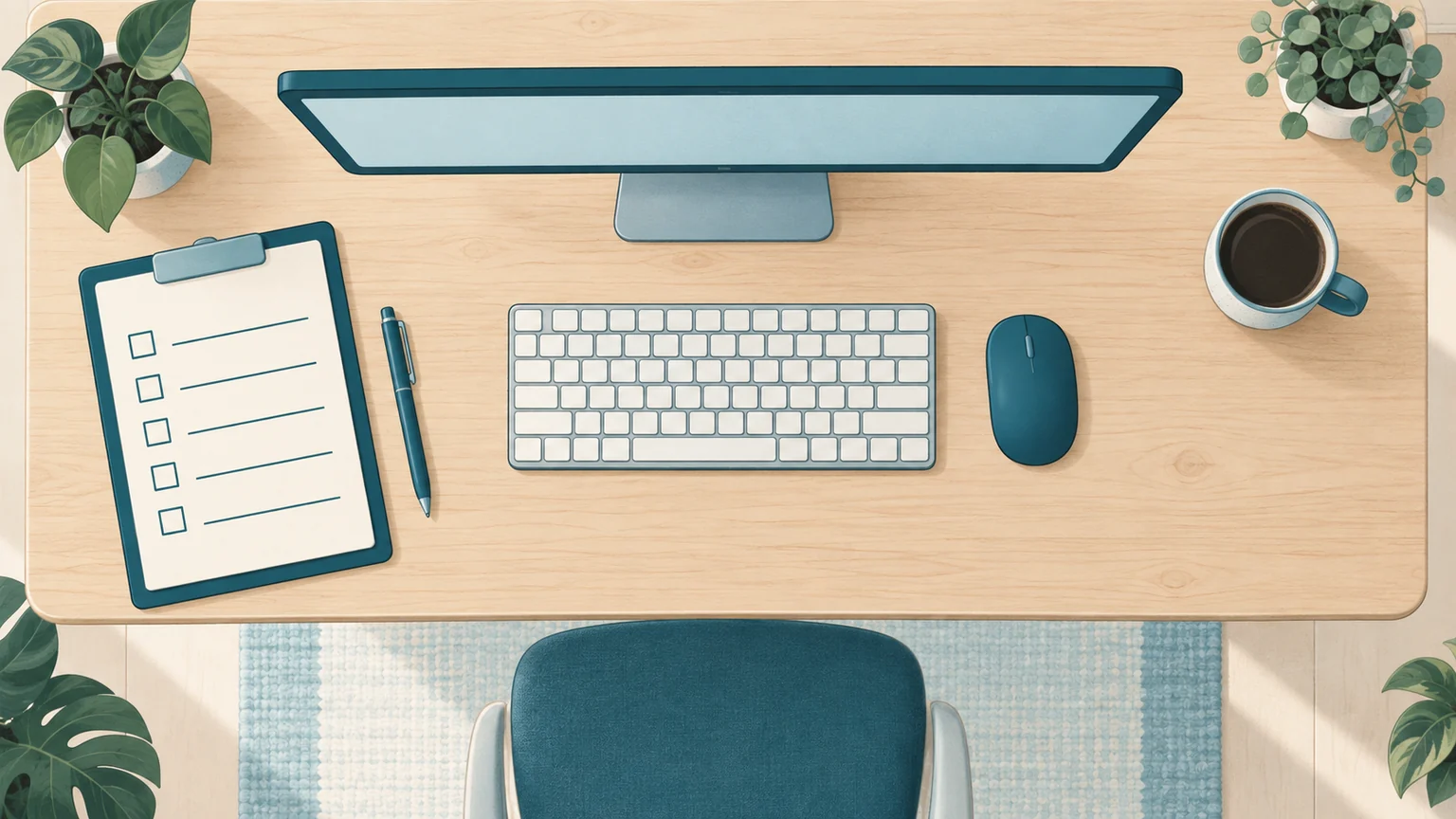
Check the setup you actually use, then choose one adjustment to try.
What needs attention at your desk?
Adjustments to try
No adjustments selected. If your setup feels comfortable, keep it flexible and leave room for breaks. You can select an item above whenever you want to revisit it.
- Bring your main task into view. Place the display you use most in front of you. Adjust its height and distance while reading your usual work, and notice whether you can keep your head comfortably balanced. Check screen height and distance. Using progressives or bifocals?
- Make the work easier to read. Try a larger text size or app zoom before moving closer. If you use two screens, check the size on each one with the same document. Adjust text and app sizes in Windows.
- Find the source of the reflection. Check from your normal seat. Adjust one blind or lamp at a time, and keep a desk lamp aimed at paper rather than the display. Recheck when daylight changes. Work through the lighting guide.
- Bring the controls within easy reach. Clear space for the keyboard and mouse close to your body, with your upper arms near your sides. With a raised laptop, use a separate keyboard and mouse so you can position the screen independently. See practical laptop setups.
- Choose a cue to pause. Use a reminder or a natural task boundary to look away from nearby screens. Include opportunities to get up or switch activities during the day. Build a screen-break habit.
Try one change, then return to your work
Start with the adjustment that seems most useful. Read, type, or work through your usual task for a few minutes, then decide whether to keep the change. You do not need to solve every item at once.
For a shared desk, note the settings you like or take a quick photo without personal information on the screen. Repeat the check when you change workspaces, equipment, or glasses.
Need a layout for your particular equipment? Explore laptop setups. Arrange two monitors.